Thinning hair changes the rules of a haircut. Styles that worked at twenty five can work against you at forty, not because they are bad cuts, but because they expose what you are trying to downplay. The good news is that barbers deal with this every day in China Grove, and the fixes are mostly about length, texture, and honesty rather than any product promise.
Waiting is the part that quietly costs you. The longer a style fights thinning hair, the more obvious the thinning becomes, and the harder the eventual correction feels. This guide covers what is happening, the cuts that work with it, and why acting while you still have options is the cheaper path in every way except money, which is not the currency here. The currency is choice.
What is actually happening
Most male thinning follows a pattern: recession at the temples, thinning at the crown, or general diffusion across the top. Hair does not usually vanish overnight. Individual hairs grow back finer and shorter over successive cycles, so coverage fades gradually. That gradual pace is why men often notice it late, in a photograph or a bright bathroom light, long after a barber first saw it developing.
Those figures explain the strategy. Because growth is slow and thinning is gradual, every cut is a medium term decision. A style that needs three months to grow into is a style you will live with through the whole correction if it turns out wrong.
Length choices that help
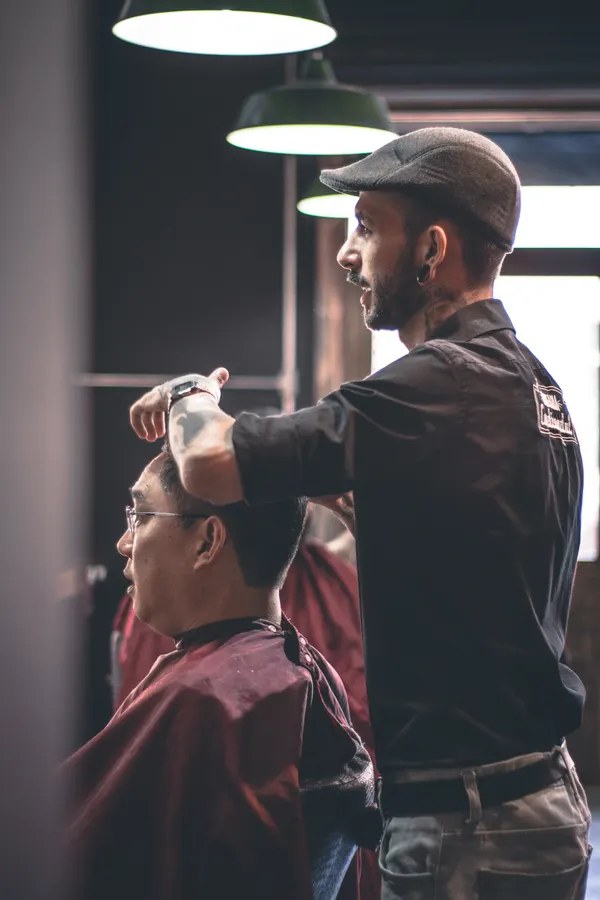
The central fact is that contrast exposes thinning. Long hair on top next to a bare crown makes the crown look barer, and long strands separate and show scalp under light. Shorter, even length across the top reduces contrast and reads thicker, which is why a textured crop, a short crew, or a buzz with a fade often looks fuller than the longer style a man has been protecting.
Growing the sides long to match thinning top hair backfires the same way. Full sides make the top look thinner by comparison. Keeping the sides tighter draws the eye to the clean shape of the cut instead of the density difference. At South End Barber Shop, this is usually the first adjustment suggested, because it works immediately and asks nothing of the hair itself.
Texture and styling that read thicker
Texture is the barber's main tool here. Point cutting and light texturizing break up the ends so hair does not lie in flat sheets that reveal the scalp. A forward styled crop uses the hair that remains at the front instead of sweeping it back, because sweeping back exposes a receding hairline in full. Matte products help, since shine separates strands and reflects light off the scalp. A small amount of matte clay or paste, worked through dry hair, keeps strands grouped and dull in a good way.
Wet look gels are the enemy of thinning hair. They clump strands into spikes with scalp showing between them. If your current product leaves your hair looking stringy within an hour, the product is the problem more often than the cut is. Ask for a recommendation by finish, matte, rather than by hold strength.
The cost of waiting
Neglect here rarely means skipping cuts. It means keeping a style that no longer fits and compensating with length, which steadily makes the situation more visible. It also means the eventual change becomes dramatic, and dramatic changes draw the comments men were hoping to avoid. Small adjustments made early, a little shorter here, tighter sides there, look like nothing more than a man updating his cut.
There is a practical side too. As coverage changes, some options close. A style that needs a strong front hairline stops being available, while short and textured options stay open for years. Acting early means choosing from the full menu. Waiting means the menu chooses for you. A straight conversation with your barber in China Grove about where the thinning is headed will get you a plan that ages with you instead of a series of surprises.
What not to do
Skip the comb over in any form, including the modern side sweep grown specifically to cover a crown. It separates in wind, under hats, and in the humid Piedmont summer air, and everyone has seen it fail. Skip growing a long fringe to hide recession for the same reason. And be skeptical of any cut that depends on a lot of product and careful arrangement to look acceptable, because a style that collapses by lunch is not a style, it is a morning performance.
Common questions
Does cutting thinning hair shorter really make it look thicker?
Yes, in appearance. Even, shorter length reduces the contrast between covered and thin areas and stops long strands from separating and showing scalp, so coverage reads fuller.
Should I shave my head completely?
Only if you like the idea. Many men suit a very short buzz or a textured crop and do not need to go to skin. Try stepping down in length over two or three cuts before deciding.
Can a barber stop my hair from thinning?
No. A barber can choose cuts and products that work with thinning and keep it looking its best. Anything that claims to regrow hair is a medical question, not a barbering one.
Photos in this guide are representative stock images.
← All guides from South End Barber Shop← Back to South End Barber Shop